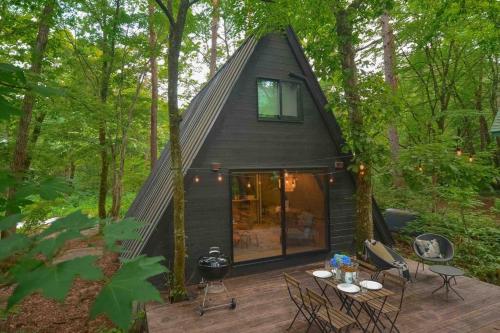
 Cabin
Cabin1. Sobae Sanso - Adorable A-Frame Cottage
In Hakuba, about 2 km from Hakuba & Nagano · Mountains
€262/ nightPrice checked September 25, 2026
View & bookThe Japanese Alps that hosted the Winter Olympics — Hakuba and Nagano pair legendary powder snow and onsen hot springs with timber chalets and cabins beneath the peaks.
6 verified tiny houses · 9.0/10 · 31 reviews · Latest check: September 26, 2026 · see on the map →
Mountains
December–March, June–October In season now
3 hrs from Tokyo.
Heavy-snow winters, cool summers.
A tiny house stay in Hakuba plays out across two entirely different seasons. In winter — December through March — deep powder covers the slopes above the village, and the chalets and cabins of Hakuba Valley are as close to ski-in/ski-out as a cabin holiday gets; unpack once, ski every day, return to a cedar-lined room and an onsen soak. The summer experience is quieter but underrated: from June through October the valley clears to flower-filled alpine meadows, mountain bike trails slice down the faces of the Hida range, and the heat of Tokyo feels a world away.
Most timber cabins in the area draw on traditional Japanese joinery and use local cedar and pine. The wider Nagano prefecture adds day-trip depth: snow monkeys at Jigokudani, the historic castle town of Matsumoto, and the Shinkansen-quick connection back to Tokyo mean this works as a base for a full week rather than just a snow weekend.
Heavy-snow winters, cool summers.
See all stays in Hakuba & Nagano on Booking.comIncludes hotels and apartments, not only tiny houses.
CabinIn Hakuba, about 2 km from Hakuba & Nagano · Mountains
 Cabin Verified
In Hakuba, about 3 km from Hakuba & Nagano · Mountains
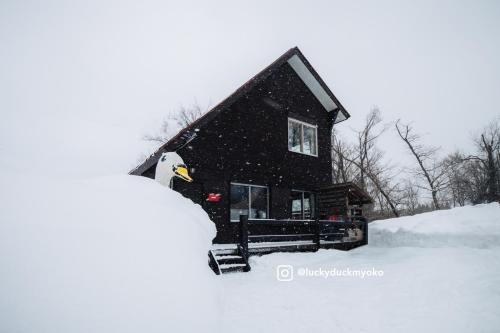 Cabin Verified
In Myoko, about 36 km from Hakuba & Nagano · Mountains
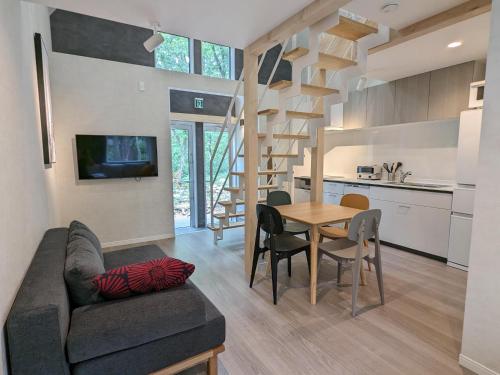 Cabin Verified
In Hakuba, about 3 km from Hakuba & Nagano · Mountains
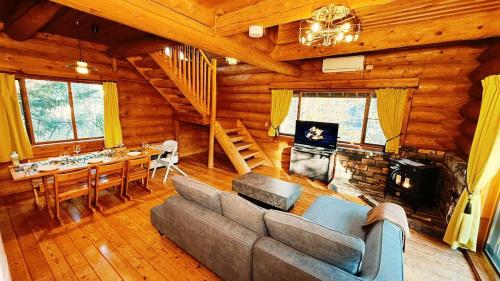 Cabin Verified
In Hakuba, about 3 km from Hakuba & Nagano · Mountains
 Cabin Verified
In Hakuba, about 3 km from Hakuba & Nagano · Mountains
See all stays in Hakuba & Nagano on Booking.comIncludes hotels and apartments, not only tiny houses.
Every place is checked by name and type before it goes live — no hotel rooms, no ordinary apartments.
These stays we confirmed with an outside source on top, and amenities like hot tubs count only once verified — never guessed.
Your booking completes on Booking.com or Vrbo at their price. The atlas earns a small commission, at no cost to you.
Both seasons are excellent but distinct: winter (December–March) is for world-class powder skiing and onsen; summer (June–October) offers cool hiking, mountain biking, and wildflower meadows with far fewer crowds. Spring and autumn are beautiful but some mountain lifts close.
The fastest route is Shinkansen to Nagano Station (about 80 minutes) followed by a 60-minute bus or taxi to Hakuba village — total journey roughly three hours. Direct highway buses from Shinjuku also run daily in ski season.
The accommodation mix includes purpose-built ski chalets with insulated lofts and storage for ski gear, smaller cedar-clad cabins near the forest edge, and a handful of true tiny houses on agricultural land in the valley floor. Most have access to a communal or private onsen.
Booking sites don’t have a “tiny house” category — they file these stays under the generic “Accommodation” label. So we check every place by name and type and list only genuine free-standing small homes: tiny houses (on wheels or fixed), cabins, glamping pods, shepherd huts, yurts, domes and tree houses. No hotel rooms, no ordinary apartments.
The atlas currently lists 5517 hand-checked small stays across 485 destinations in 79 countries — 3731 of them additionally verified through independent research with a documented source.
Prices and availability come from our booking partners and can change at any time. Booking links are affiliate links — booking through them supports this site at no extra cost to you. Property type is checked from the listing name and category; if you spot a mistake, let us know.