One thing before we start: Lena, our virtual ambassador, is an AI-created character, and the pictures in this piece are labelled illustrations. The preserving advice in the second half is a different matter — that comes from our own kitchen.
The plum tree stands maybe twenty metres behind the house, where the mown part of the meadow gives way to tall grass. Lena spots it on Saturday morning from the kitchen window, while the coffee is still brewing. An old tree, unpruned for years, and in late August it hangs so full that the lower branches bend almost into the grass.
A quick message to the host; the reply arrives ten minutes later: take as many as you like, we won’t get around to them this year anyway, they just end up in the grass. And with that, Saturday has a plan.
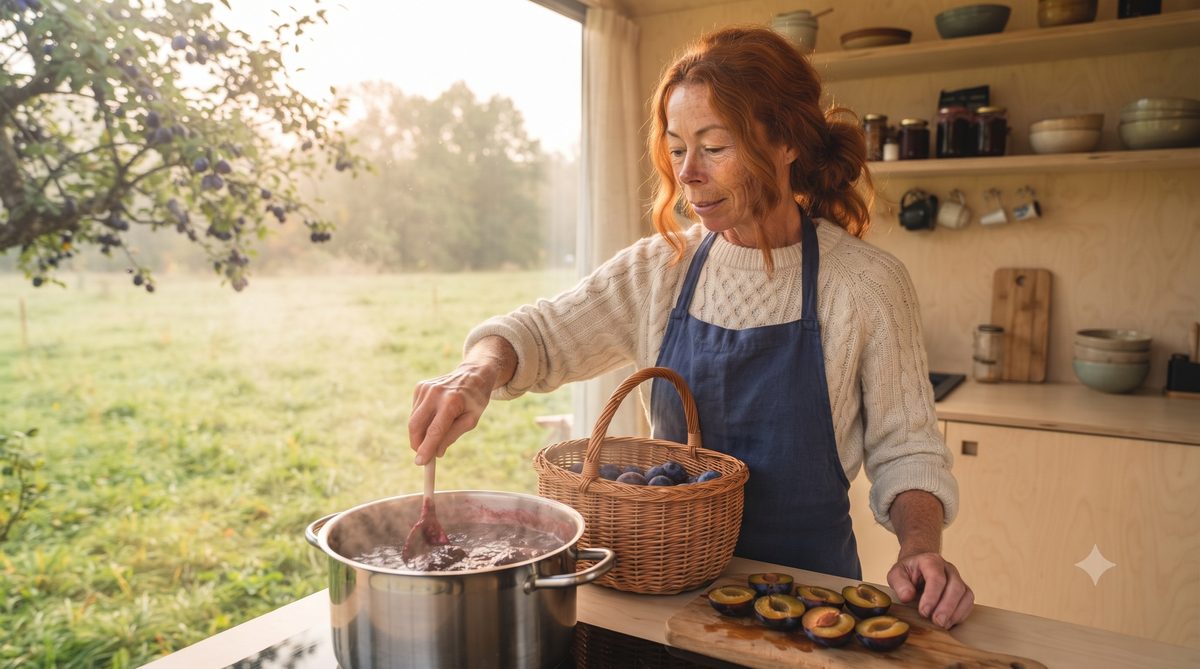
Are two burners enough?
The kitchen in the house: two induction burners, one reasonably big pot, a board, a decent knife. For jam, that is genuinely all you need. No step in the process requires a third burner or any gadget, just a wooden spoon and some patience.
The real trick is the quantity. A kilo and a half of fruit per batch, no more. It cooks down faster, it is far less likely to catch, and it fits a normal pot. So: halve and stone the plums, sugar on top, let them sit for half an hour. That is enough time to wash the jars. Then let it simmer, stir now and then, and after a good hour the jam is thick enough. The whole house will smell of hot plums afterwards; in eighteen square metres there is no avoiding that. Nobody has ever complained.
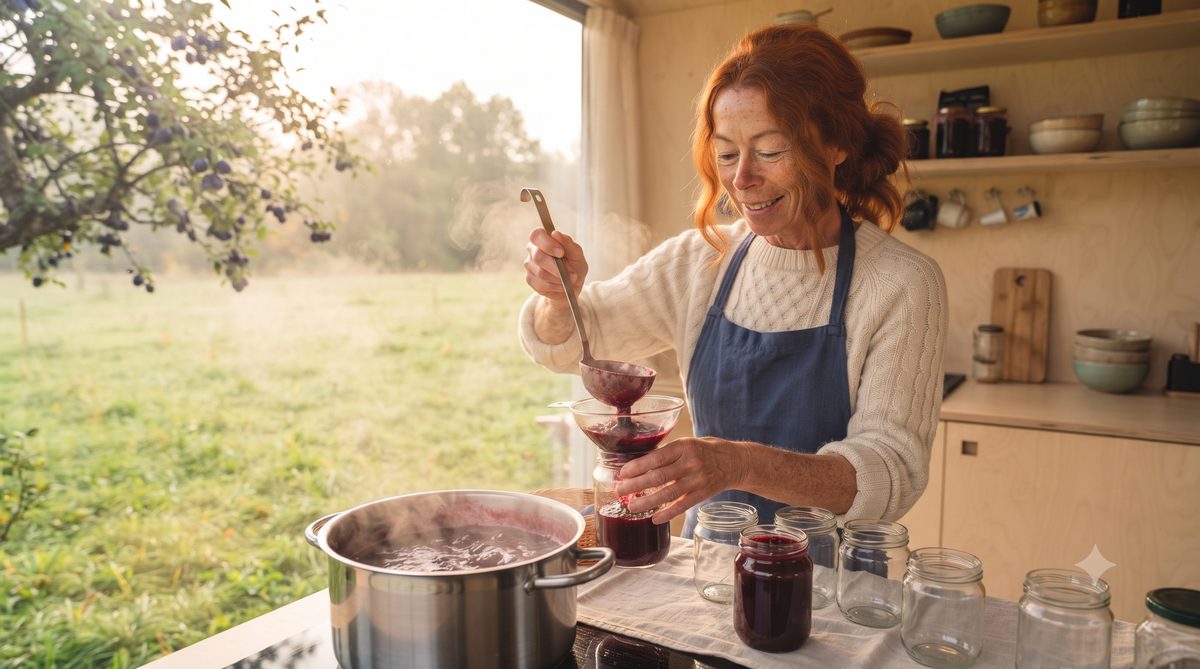
The pot is never more than three steps away
You cannot wander off from the stove in a house this size. So Lena stays close, sets the table in between, reads a few pages, stirs again. At some point the colour tips from reddish blue into that dark violet that only Zwetschgen plums manage. By evening, six jars stand on the windowsill, labelled in pencil on kraft paper.
This, by the way, is why we are so fussy about making sure the houses in this atlas are actually small. Not because small looks cuter, but because you do different things in a small house. In a big holiday home with a television, that Saturday would probably have turned into a box-set evening.
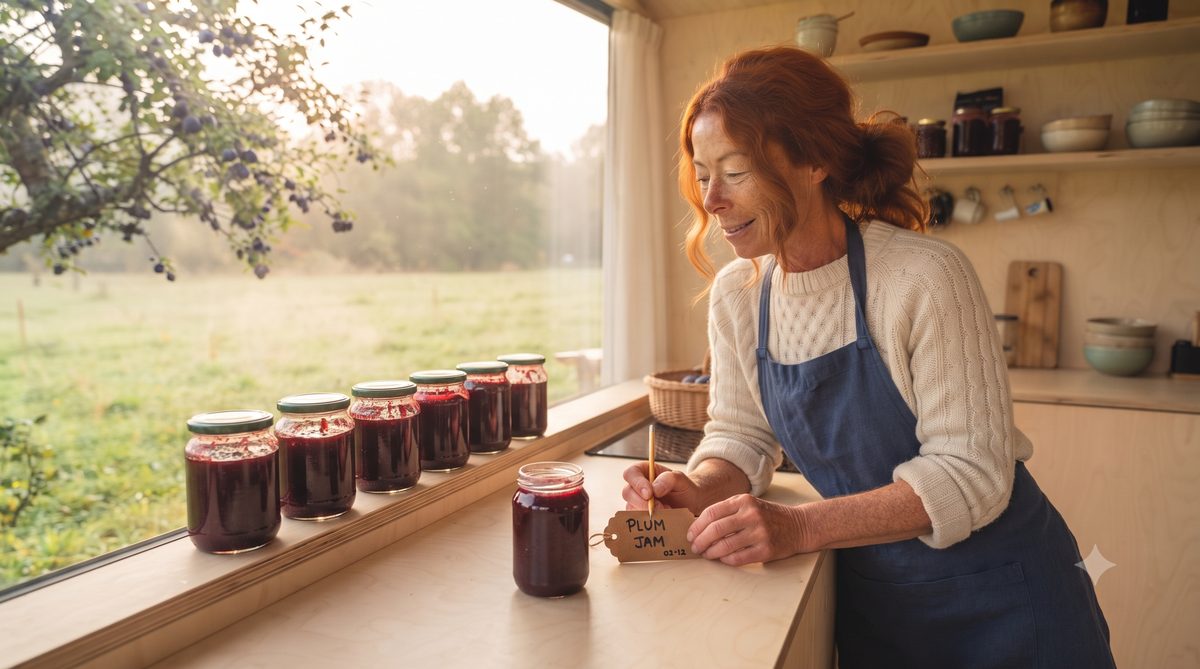
Doing it yourself
Ask first. Most hosts are happy for guests to pick fruit on the property — otherwise it just rots. One message settles it, and quite often a tip about where the mirabelles are gets thrown in.
Jars. Either bring two or three empty screw-top jars from home (they weigh next to nothing), or have a look around the holiday house — there is almost always a drawer with empty jars in it somewhere. Boil them for ten minutes in simmering water, stand them upside down on a clean tea towel, done.
Sugar. The classic ratio is 2:1 fruit to preserving sugar. If the village shop doesn’t stock it: plain sugar, the juice of a lemon and a somewhat longer simmer work just as well — that is how it was done before preserving sugar existed.
Leave the kitchen clean. Burnt-on sugar on the hob is the one real argument against holiday jam, so wipe everything down while it is still warm. And leave a jar for the host. In our experience that lands better than any five-star review.
Where to try it
Late summer is preserving season across the whole northern half of the atlas: plums in Germany and Poland, brambles in Britain’s hedgerows, figs further south. When you browse the map, it is worth looking closely at the photos: a proper kitchen counter and a garden that has gone slightly wild are both good signs — the wild gardens are where the old trees stand. And if a listing mentions an orchard, you may as well read that as an invitation.